Cherry Hill's rental housing inspection checklist is specific about the dryer vent before a new tenant moves in. The dryer has to vent to the outside through 4 inch metal duct, rigid or flexible, with a backdraft damper mounted on the exterior where the duct terminates. Flexible plastic hose is not permitted anywhere in that run, and a condensing dryer, the kind that collects moisture in a reservoir rather than pushing it outside, is exempt from the venting requirement altogether. That single line covers one appliance in one closet or laundry room, but in a township where apartment complexes of 20 units or more make up the second largest group of homes according to the township's own housing plan, that same line gets checked over and over across a lot of units every year. Other municipalities across Camden County run similar turnover checklists, but Cherry Hill's own wording is the one a landlord here has to meet.
When the inspection happens
Cherry Hill ties this inspection to turnover rather than to a calendar date. The checklist applies at every change of occupancy, meaning a landlord schedules the walkthrough once a unit sits vacant between tenants and gets it signed off before the next tenant takes possession. An occupied apartment does not get this inspection on its own separate schedule the way a smoke alarm test might; it waits for the unit to empty out. That timing matters for the dryer vent specifically, since a vacant laundry closet is the easiest, and often the only, point in a lease cycle where a landlord or a contractor can pull the machine forward and look at the full run from the back of the dryer to the termination outside without working around a tenant's schedule or belongings stacked in front of it.
Checking the connector, the duct and the outside damper first
A landlord who wants the walkthrough to go without a flag looks at the same three things the inspector will look at. First is the connector, the short run from the back of the dryer to the wall or floor outlet. A flexible foil or semi-rigid metal connector meets the line; a white or silver ribbed plastic hose, still found behind older machines in plenty of rental units, fails on sight and gets swapped before the inspector shows up. Second is the duct running through the wall or ceiling cavity, checked for size and material along its full length rather than just at the two ends, since a run that starts as 4 inch metal and necks down to something smaller partway through still misses the mark. Third is the exterior termination, checked for the backdraft damper itself, the flap built to swing open while the dryer runs and close against outside air and pests once it stops. A damper that has rusted open, lost its spring, or gone missing leaves that termination unable to do the one job the checklist assigns to it.
Turnover is also the time to clean the run
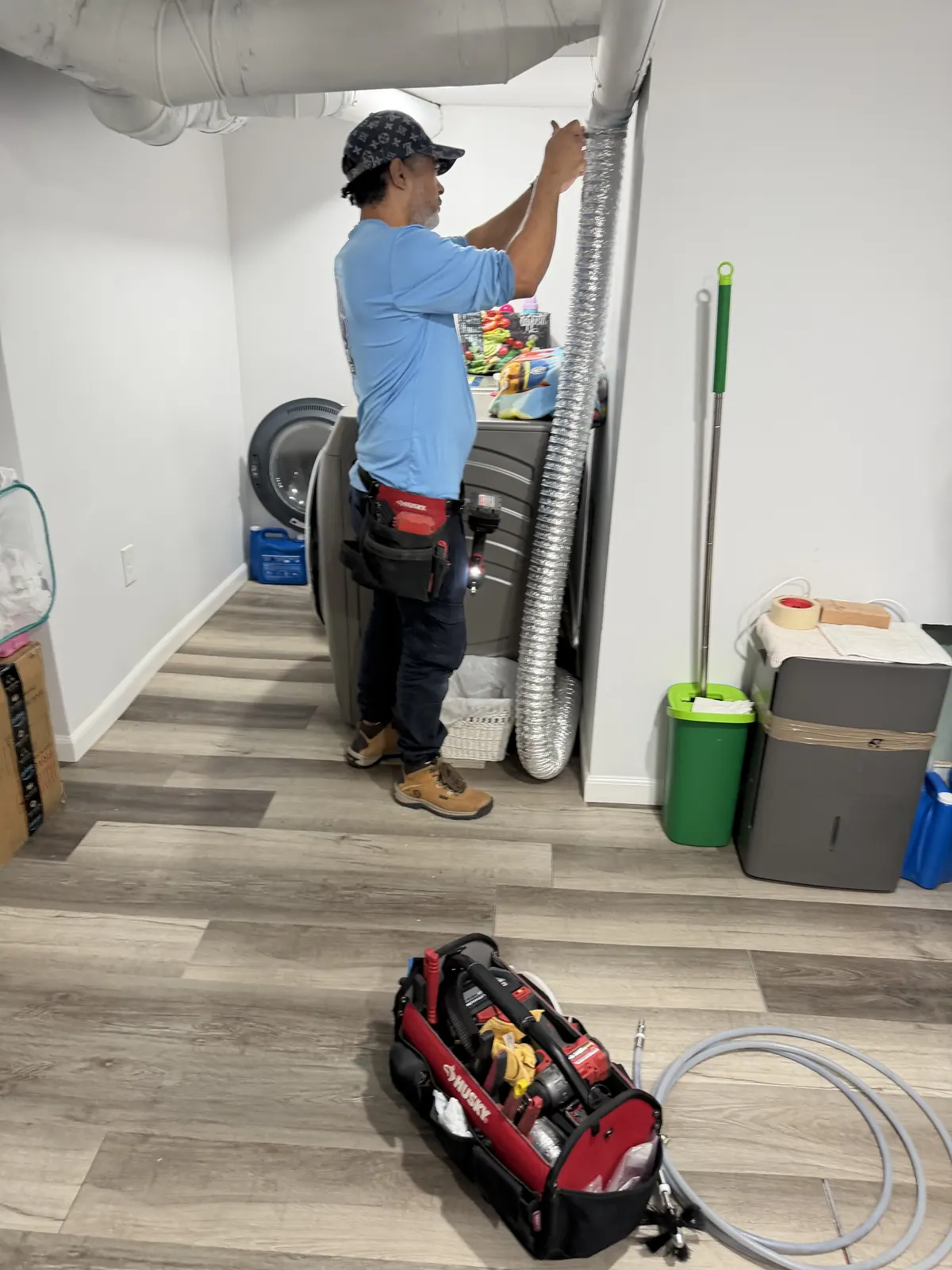
A vacant unit between tenants is also the point in a lease cycle where cleaning the vent makes the most sense, since the laundry closet is already open and empty and no one's schedule is competing for access to the machine. Dryer Vent Cleaning done at turnover clears lint built up over the outgoing tenant's lease, which in a longer run with a few elbows or a vertical rise through more than one floor is the section most likely to be holding material a visual check from either end would miss. Where the walkthrough turns up a run that was built with plastic hose from the start, too small a duct, or too many feet of flexible duct snaked through a joist bay to meet the line in the checklist, that calls for Dryer Vent Installation rather than a cleaning, since the fix is a new run in the right material and size, not clearing out the one already there.
The rest of the venting lines on the same checklist
The dryer vent line sits alongside a handful of other venting and exhaust items on the same page. Furnaces and water heaters have to vent properly and show no loose or disconnected flue connector where it meets the appliance or the chimney. Heat outlets, the registers and grilles that heat moves through, have to be secured in place rather than loose or missing. The chimney itself has to be intact and unobstructed, which for a unit with a working fireplace, or a furnace and water heater sharing a flue, means no visible cracking in the structure, no missing cap, and no blockage keeping combustion gas from clearing the top. Every bathroom has to have either a window or a fan that exhausts to the outside, since a bathroom with neither leaves moisture with nowhere to go but the drywall and the framing behind it. None of these lines exists on its own; a unit that passes the dryer vent line but fails the chimney line still fails the inspection as a whole.
What the checklist covers and what it does not
Cherry Hill's own language around this document calls it a courtesy meant to help a landlord prepare, and it says plainly that the list is not all-inclusive. That phrasing matters for how a landlord reads it. The checklist flags the venting and exhaust items an inspector is known to look at, but it is not a stand-in for the township's full rental housing ordinance, and it does not cover every condition an inspector might cite on a given visit. A landlord who works through the dryer vent line and the rest of the printed venting items is covering ground the inspection is built to check, not the entirety of what that inspection can find on a walkthrough of an older unit.