Dryer Vent Cleaning in Cherry Hill, NJ
A dryer vent cleaning removes the lint packed into the run that carries hot, damp air from the dryer to the cap outside, so that air leaves the house instead of backing up into the machine. Around Cherry Hill that run can be a short hop through a basement wall or a long path across a townhome ceiling to the roof, and the cleaning is planned around which one you have.
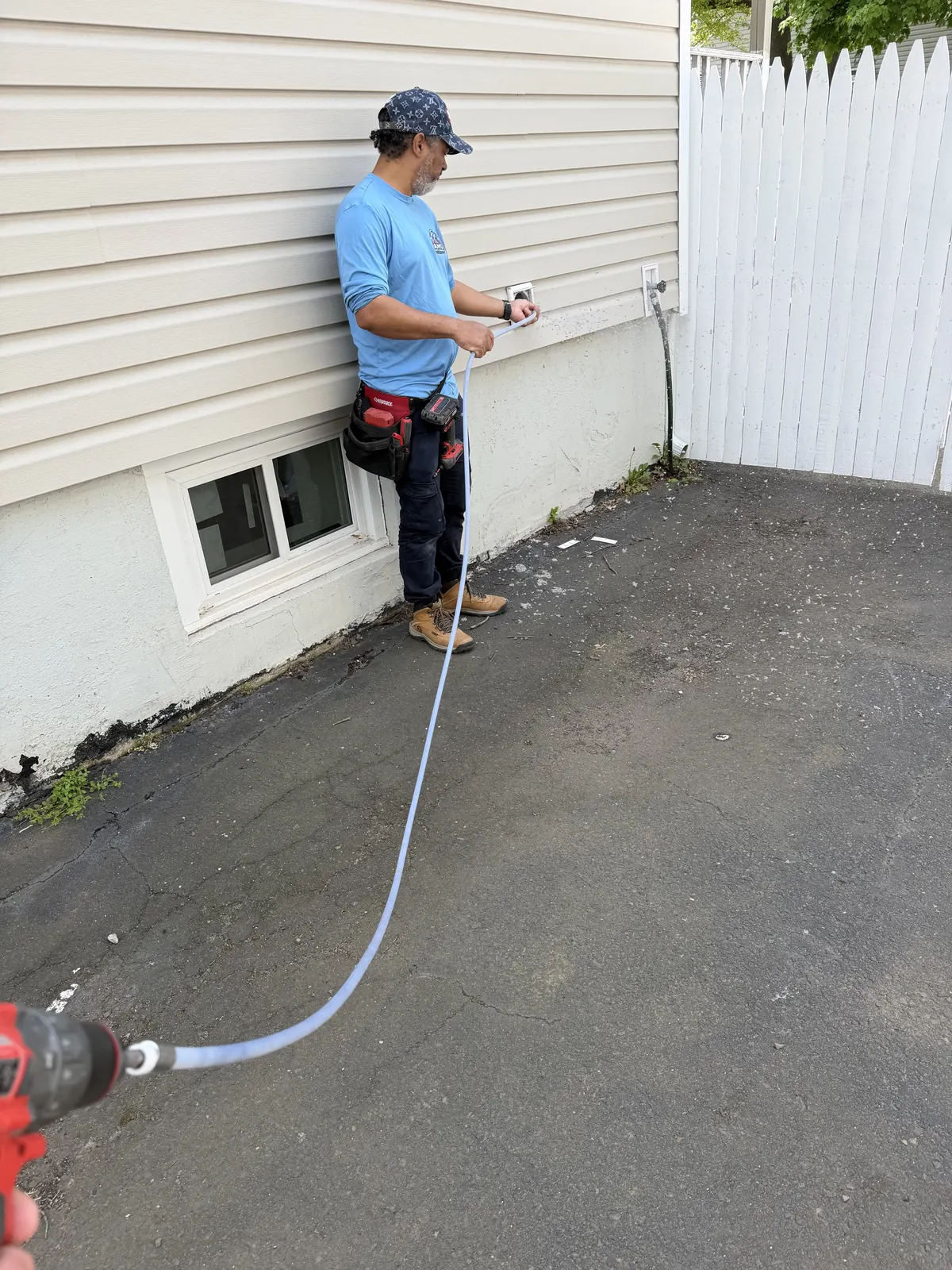
In many of Cherry Hill's postwar split-levels and ranches, the washer and dryer share the lower level or the basement with the furnace, and the vent crosses a short stretch of joist bay to a cap on the side of the house. Those runs are easy to reach but easy to neglect, because nobody sees them. Attached homes are different. Where a townhome or condo in Voorhees, Mount Laurel, Evesham or Maple Shade puts the laundry upstairs or in a closet in the middle of the unit, the vent has to travel farther, turn more often and sometimes climb to the roof, and every turn is a place for lint to settle.
The U.S. Fire Administration's dryer safety flyer says the risk of a dryer fire goes up when the lint filter and the dryer vents are not cleaned. It tells owners to clean the filter before and after each cycle, to check that the venting behind the dryer is not damaged, crushed or restricted, and to make sure the outdoor vent covering opens while the dryer runs. Those checks catch a lot: a foil hose squashed behind a stacked unit, a flap painted shut by a house painter, a roof cap matted over with lint.
How is a dryer vent cleaned?
The crew slides the dryer out, disconnects it and looks at the transition hose first, since a crushed or kinked hose behind the machine chokes airflow however clean the rest of the run is. Lint is vacuumed from the dryer's exhaust connection and from the floor and wall behind it. The run itself is then cleaned with a rotary brush on flexible rods, fed from the inside and, where the cap can be reached, from the outside as well, with a vacuum collecting what comes loose. Brushing goes in both directions where the run allows it, since lint packs hardest against the far wall of each elbow.
Outside, the hood is emptied of lint and any nest, and its flap is worked by hand to be sure it swings freely, because a flap that sticks halfway shut is a restriction of its own. Once everything is reconnected, the dryer is run on air or heat while the technician checks the flow at the outlet. Sections of plastic or foil duct, and runs that were never fastened or supported, are pointed out so the homeowner knows what is inside the wall and what a fix involves.
What changes in a townhome, condo or apartment?
Long runs and roof exits change the job. A vent that crosses a ceiling and turns up through the roof collects lint at each elbow and at the cap, where cold air meets warm exhaust and the lint gets damp enough to stick. Roof work needs safe access and, in many associations, permission, so the crew asks about the association's rules for ladders and roof access when the visit is booked. Caps fitted with screens trap lint by design, and the crew recommends replacing them with a proper dryer cap.
Stacked washer and dryer units in closets leave little room to work, so the machine may need to be moved out into the hallway before the hose can be reached. In apartment complexes and condo buildings, a property manager can book several units on one visit, and access to units, roof hatches and common laundry rooms is arranged ahead of time. Shared vents and booster fans in larger buildings are checked with the machines connected to them.
How can you tell the vent is clogging?
The first sign is time. A load that used to dry in one cycle now takes two, towels come out damp at the seams, and the laundry room feels hot and humid while the dryer runs. Other signs are clothes that are too hot to handle at the end of a cycle, a burning smell, lint collecting around the outside flap, or a flap that barely moves when the dryer is on. Many newer dryers also carry a restricted vent indicator, and it should not be ignored. Birds like wall caps in spring, and a nest in the hood can block a vent that was clean the month before.
Some checks you can do yourself. With the dryer running, go outside and put a hand near the cap; you should feel a strong, warm stream and see the flap open. Look behind the dryer for a hose that is crushed, torn or made of thin foil. If the vent is clear and the dryer still struggles, the problem may be inside the appliance, and you will hear that from the crew instead of paying to clean a vent that was not the cause.
How often, and how is a visit booked?
There is no single interval. A short run in a two-person household lasts much longer between cleanings than a long townhome run serving a family of five with a dog, and a vent that ends at the roof clogs faster than one that ends in a side wall. After the first cleaning, the crew suggests a schedule based on how much lint came out of your run. Between visits, clean the lint screen with every load and keep plantings, leaves and snow away from the outside cap.
AMG Duct Cleaning Cherry Hill cleans dryer vents in Cherry Hill, Pennsauken, Haddonfield and Voorhees on the Camden County side, and in Evesham, Mount Laurel and Maple Shade across the Burlington County line. AMG is veteran owned and is licensed and insured (NJ HIC 13VH13654300); this location, rated 5.0 from 16 Google reviews on its own profile, answers the phone 8 AM to 8 PM, Monday to Saturday. Many households book an air duct cleaning at the same visit, and when the run itself is the problem, dryer vent installation swaps it for rigid metal on a shorter path.
What is included
- The dryer pulled out and the transition hose checked
- Lint vacuumed from the exhaust connection and behind the machine
- The full run brushed with rotary brushes and collected by vacuum
- The outside cap and damper flap cleared and checked for movement
- Roof caps cleaned where the run exits through the roof
- Plastic, foil or unsupported sections pointed out
- The dryer reconnected and run while airflow is checked at the outlet
- A walkthrough of what came out and how the vent is routed
Before and after
Real AMG work, photographed before we started and after we finished.


Questions and answers
How often should a townhome dryer vent be cleaned?
Run length and laundry volume decide it. A long run with several turns, or a vent that ends at the roof, clogs faster than a short run out a side wall. After the first cleaning the crew suggests an interval based on how much lint came out.
Is a roof-vented dryer line something you can clean?
Yes. The roof cap is cleaned and checked along with the run below it, with safe access and any association permission arranged when the visit is booked. A cap with a screen traps lint, and the crew will recommend a proper dryer cap in its place.
My dryer needs two cycles for one load. Is it the vent?
Often, yes. A restricted vent is the most common cause, from lint, a crushed hose or a stuck flap, and the crew checks airflow at the outlet before and after cleaning. If the vent is clear and the dryer still underperforms, the fault is likely in the appliance, and you will be told that plainly.
Do I need to pull the dryer out before the crew arrives?
No. The crew moves the dryer, disconnects it and reconnects it when the work is done. Clearing baskets and shelves from the laundry area makes the visit quicker, and stacked units in closets may need hallway space.
How much does dryer vent cleaning cost in Cherry Hill?
The price depends on how long the run is, how many elbows it has and whether the cap is on a wall or the roof. The estimate is free, and for a plain wall vent it can often be given once the route is described.
More questions and answers about our work
Dryer Vent Cleaning across South Jersey
We provide dryer vent cleaning in South Jersey. Choose your town for local details.
Ready for cleaner air?
Tell us about your home and get a free estimate.