A property manager running a Maple Shade apartment complex deals with a version of dryer vent work that a single-family service call never touches: multiple units, multiple vent runs, and at least one shared laundry room that gets used by every household in the building. The method that holds up is building by building, not complex by complex. One crew works one building start to finish, cleaning each run and exhaust hood, logging what came out of it, telling tenants before anyone knocks, and writing up any foil connector or crushed run for the owner to decide on rather than patching it quietly and moving to the next door. Maple Shade's own housing stock points to why this matters here specifically. A good share of the township rents rather than owns, fewer than half of its homes are single detached houses, and the township's housing plan traces two construction waves, one through the 1950s and another through the 1970s, that left behind a mix of garden-style buildings built around a central laundry room and later construction where each unit got its own closet dryer vented out through a wall or up through the roof.
Building by building, not complex by complex
Treating an entire complex as one job invites shortcuts. A schedule built around a single building at a time keeps the work traceable: every unit in that building gets visited or at least attempted, every run gets a start-to-finish check rather than a quick look at the exterior hood, and the crew leaves with a complete picture of that building before moving to the next. Dryer Vent Cleaning on a complex like this is a series of individual jobs stitched together under one visit, and the building-by-building approach is what keeps a manager from finding out six months later that three units on the back stairwell were skipped because nobody answered the door the first time around.
Shared laundry rooms versus in-unit closet dryers
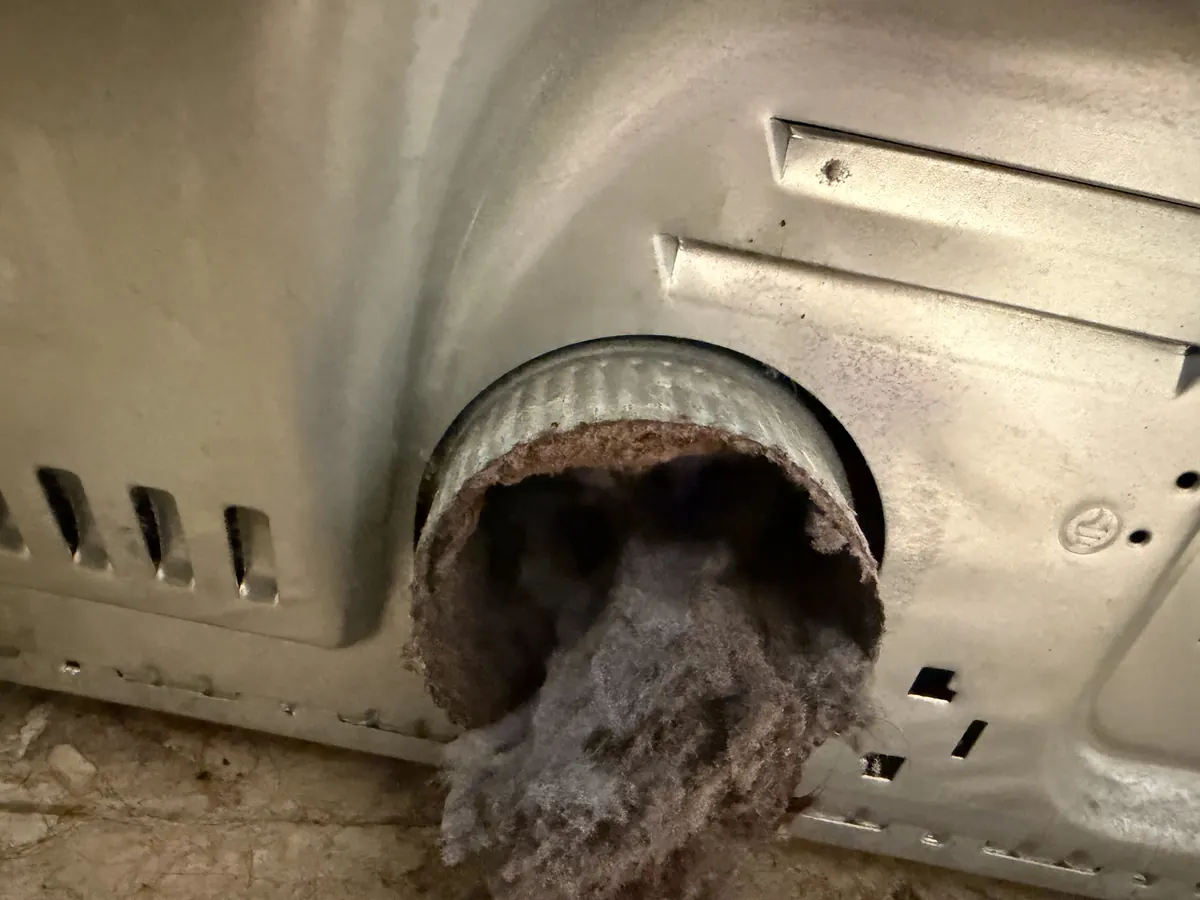
The older garden-style buildings common in Maple Shade usually route several dryers from a shared laundry room into one exhaust stack or a cluster of short individual runs punched straight out through the back wall. Every tenant in the building uses that same room, so lint load climbs faster than it would behind a single family's dryer, and a run that looks short and simple on paper still carries the exhaust of dozens of loads a week. Newer construction, where each unit has its own closet dryer, trades that shared load for a longer individual run, often traveling through a chase and up through the roof rather than straight out a wall. Those runs are harder to inspect from outside, more likely to use a flexible foil connector behind the machine, and more likely to get crushed where the dryer was pushed back against the wall during a move.
Notifying tenants before anyone knocks
In-unit access only works if tenants know it is coming. Notices posted in the lobby or mailroom cover the shared laundry room days, but in-unit visits need a slip under each door naming the date and a window of time, with a reminder to clear the area around the dryer and move anything blocking the vent connection. A tenant who was not told in advance is a locked door and a missed unit, which turns one pass through the building into two. Confirming access the day before, not the morning of, is the difference between a complex that gets fully covered in one pass and one that needs a second trip for the units that were missed.
What the per-unit log should record
A log that only says a building was visited tells an owner nothing useful a year later. A record worth keeping lists the unit number, the date, the connector type found at the back of the dryer, whether the run was rigid metal or flexible foil, the condition of the termination at the wall or roof, and anything flagged for repair, a crushed section, a disconnected joint, a bird's nest at the hood. That log becomes the paper trail an owner can hand to an insurer, a new maintenance hire, or the next vendor if ever needed, and it is the only way to tell which units are overdue without re-checking every door.
How often a busy laundry room needs attention
NFPA's guidance on clothes dryer safety calls for cleaning the vent at least once a year under ordinary household use. A shared laundry room in a Maple Shade complex, running loads from several households every day, does not fit ordinary household use. A room like that is worth checking twice in a year rather than once, with the actual interval set by what the log shows, not by a fixed calendar date picked without looking at the lint coming out. A run that came back nearly clean at six months can stretch to a year. One that was packed with lint at six months needs that same six-month check repeated, not skipped because the calendar says a year is standard.
When a run gets rebuilt instead of cleaned
Some findings do not resolve with a brush and a vacuum. A long flexible foil connector behind a dryer, a section crushed when furniture or flooring went in around it, or a run with too many turns to move air properly are cleaned once to confirm the condition, then flagged for Dryer Vent Installation rather than cleaned again on the next cycle. That work replaces the flexible section with rigid metal duct run on the shortest reasonable path, corrects a crushed or kinked stretch, and seals the termination hood properly at the wall or roof. An owner managing a complex across Burlington County benefits from seeing that distinction in writing: some units need a cleaning, others need a run rebuilt, and the log is what separates the two instead of leaving every unit lumped into the same line item.