
In a lot of Voorhees, Evesham and Mount Laurel basements, the furnace is flanked by a second metal cabinet, taller than a standard filter rack, with a power cord running to an outlet and a small window or indicator light on the front. That is an electronic air cleaner, installed when the house was built or added not long after. Census estimates put the 1980s as the busiest building decade across these towns, and Mount Laurel's own housing plan counts more than 10,000 homes added between 1980 and 1999, which lines up with when these units were a common add-on next to a new furnace. A unit that age has usually outlived the furnace it was installed beside at least once, and the question we get standing in front of one is always the same: is it still doing anything, or has it been sitting there collecting dust behind a dark indicator light.
What the cabinet is built to do
An electronic air cleaner works differently from the pleated filter it usually replaced. Air passes through a set of charged wires, picks up a static charge, then crosses a stack of metal plates wired with the opposite charge, and particles stick to the plates instead of passing through to the duct system. The plates slide out as a set, called cells, and they are meant to be pulled, washed and dried on a schedule the manufacturer set for that model. There is no disposable filter to swap out. The whole value of the unit sits in the cells staying clean enough to hold a charge, and that is the part that gets skipped once a homeowner forgets the unit is even in the basement.
What a unit that has been ignored looks like
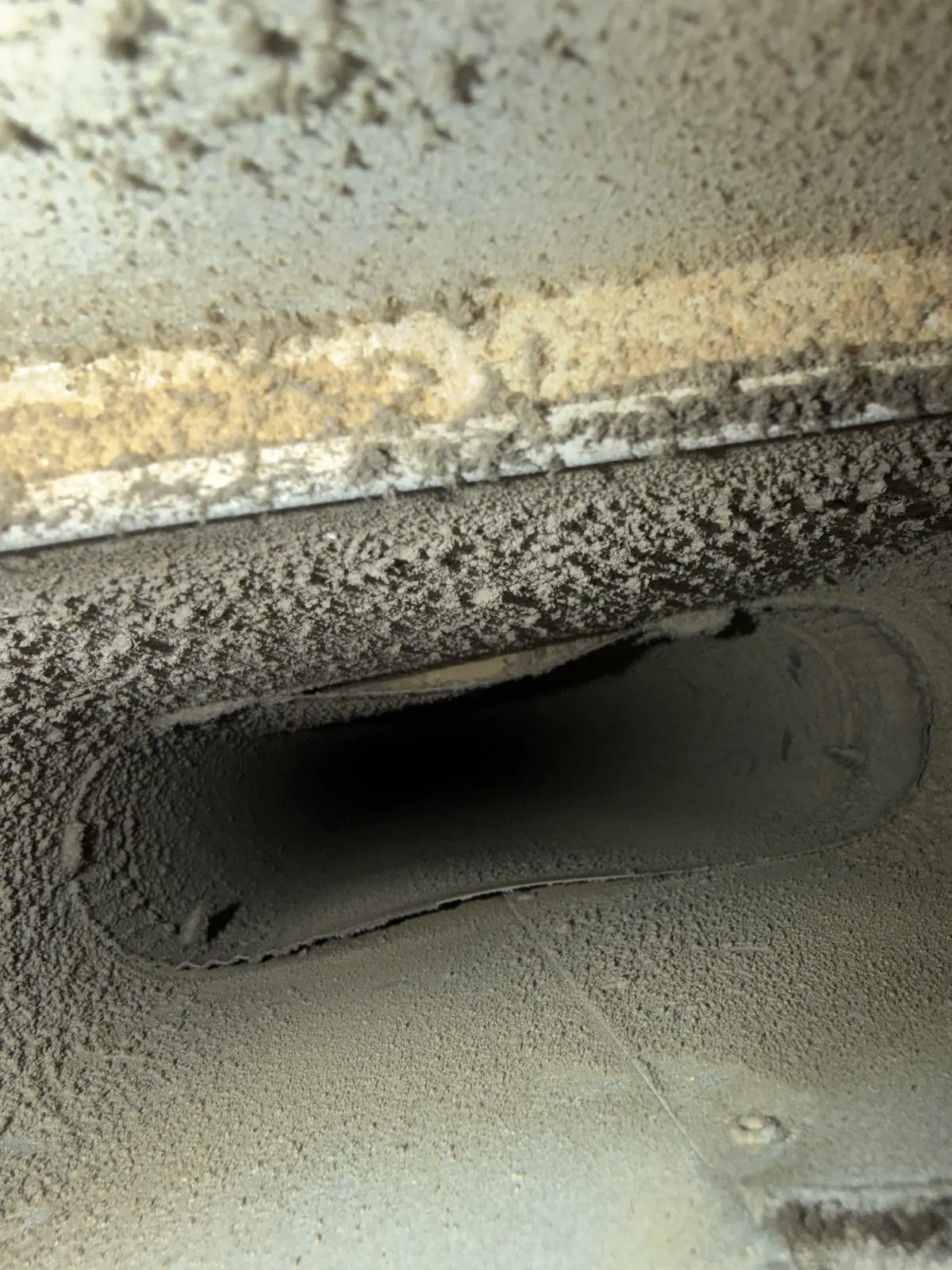
The cabinet gives a few signs before anyone opens it. An indicator light that is supposed to cycle and instead sits dark, or stays lit with no change year after year, usually points to a failed power connection or a timer board that stopped working. Open the access panel and pull a cell, and a unit left alone for a stretch shows a gray felt of packed dust between the plates thick enough that no charge could move air through it cleanly. Some owners also notice a faint burnt-dust smell when the furnace fan kicks on, which is dust baking against warm plates that have not been pulled and washed in a long while. None of that makes the cabinet dangerous sitting there. It means the one job it was installed to do has stopped happening.
Clean it on schedule, or take it out
A working electronic air cleaner is only worth keeping if someone pulls the cells and washes them on the interval printed on the unit or in the manual that came with it, usually every few weeks during heating season. If that schedule has not happened in years, there are two honest paths. One is to recommission the unit: clean the cells by hand or in a dishwasher if the manufacturer allows it, check that the power connection and any charging wires are intact, and set a reminder so the cells get pulled again before dust builds back up. The other is to replace the cabinet with a standard media filter housing sized to the same duct opening, trading the electronic charge for a disposable filter that gets changed instead of washed. A cabinet that is not kept clean and powered can also produce a small amount of ozone as part of the charging process, which is one more reason a dirty or dead unit gets serviced or swapped rather than left running unchecked.
What an idle cabinet does to the return
A cabinet that no longer collects anything is not sitting there harmlessly. Dust that weak or disconnected plates fail to catch passes straight through to the duct system beyond it, the same dust a pleated filter would have stopped. A cell pack swollen from years of buildup, or a housing door that no longer seats tight after repeated openings, also lets return air leak around the filtration stage entirely, pulling basement air and whatever sits near the furnace straight into the supply side. On an older cabinet the door gasket is usually the first thing to fail, and running a hand along the edge to check for air movement tells you more than the indicator light ever will.
What Air Duct Repair and Air Duct Cleaning check at the cabinet
When we look at one of these units on a service call, Air Duct Repair starts at the cabinet itself: the door seal, the cell rails, the power connection, and whether the housing is still the right size for the return opening or has been patched around over the years. Where the plates and housing are sound and the owner wants to keep the unit, we clean the duct system on both sides of the cabinet under Air Duct Cleaning, since years of dust leaking past a weak charge tend to build up in the trunk and branch runs just past the unit, not only inside it. Where the cabinet is beyond saving, pulling it and setting a standard filter housing in its place is usually the more direct path. Either way, the call gets made by looking at the cells and the housing, not by guessing from the top of the basement stairs.